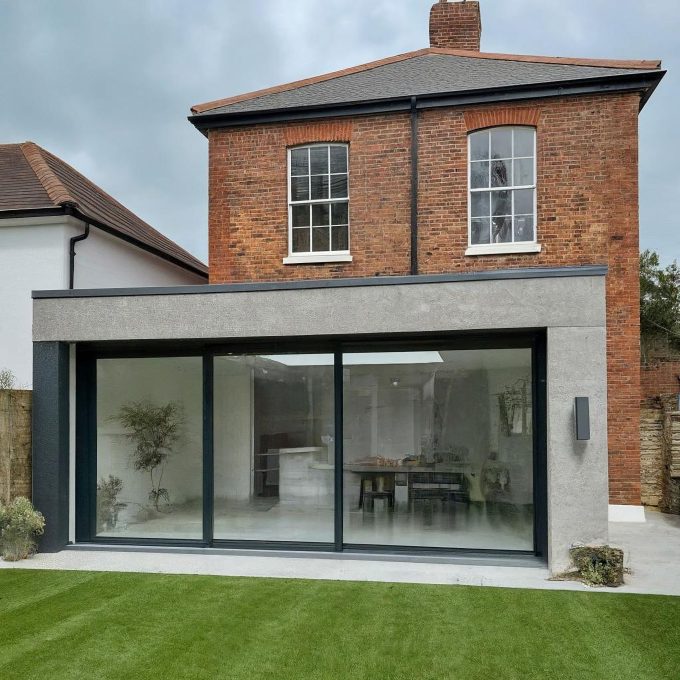
Self build has a reputation as a rural or semi-rural pursuit. Grand Designs in the countryside, timber frame homes on large plots, people who have moved out of cities to build their dream house. The assumption is that it does not really work in London.
That assumption is not quite right. Self builds do happen in London, they happen regularly, and for the right person on the right site they can produce an extraordinary result. But the challenges are real and different from what you face building elsewhere. Land is expensive and hard to find, planning is tougher, sites are constrained, and managing a build while living in one of the world’s most expensive cities adds financial pressure that does not exist in the same way when you are building on a rural plot.
This guide covers what self build in London actually involves, the different routes available, how to find a plot, how to finance it, what it is likely to cost, and the questions you need to answer honestly before committing. If you want to understand what building new involves more broadly, our guide to planning permission in London is a good place to start.
What Does Self Build Actually Mean?
Self build does not mean you physically lay every brick yourself. In practice, most self builders commission professionals to design and build their home. What makes it self build is that you are the client and decision maker throughout, rather than buying a finished home from a developer.
There are three routes that fall under the self build umbrella, and it is worth understanding the difference between them.
Full self build
You source the land, commission the design, manage the planning process, appoint the contractor, and oversee the build. You are the client in every sense. You carry all the decisions and all the risk. In return you get complete control over what gets built and potentially better value than buying a finished equivalent from a developer.
Custom build
You buy a serviced plot from a developer or enabling body that has already obtained planning permission and put infrastructure in place. You then design and build your home within the parameters set out by the planning consent. Custom build reduces the risk and complexity compared to full self build because the hard work of finding and consenting the land has already been done. In London, custom build plots are rare but not non-existent.
Managed self build
You appoint a project manager or contractor who takes on most of the day-to-day management of the build on your behalf. You retain ownership of the process and the decisions but you are not spending your weekends chasing subcontractors. For most London self builders with demanding jobs and limited construction experience, this is the most realistic route.
Most people who say they want to self build actually mean managed self build. That is not a lesser version of the idea. It is a practical approach that produces excellent results without requiring you to become a part-time construction manager.
Is Self Build Viable in London?
Yes, but with an honest set of caveats.
Land cost is the biggest barrier
London land prices are high, and a plot with planning permission commands a significant premium. A typical inner or mid London plot for a single dwelling will cost anywhere from £300,000 to £700,000 or more depending on location and what planning has already been secured. Add construction costs of £2,500 to £4,000 per square metre and professional fees on top, and the total project cost for a four-bedroom house in London can easily exceed £900,000 to £1,200,000. Our guide to finding and buying a building plot in London covers the plot search in detail.
The financial equation still works for many self builders. Comparable finished homes in London often cost more than the total project cost of building. The gap varies by location and specification, but a well-managed London self build can produce a home worth meaningfully more than it cost to build, which is one of the primary motivations.
Financing is more complex than a standard mortgage
You cannot buy a plot with a standard residential mortgage. Self build finance is a specialist product, released in stages tied to construction milestones rather than as a lump sum at completion. Most lenders require a deposit of 25% of total project costs and carry higher interest rates than standard mortgages, typically 1 to 2 percentage points above equivalent residential rates.
The cash flow implications are significant. Even with an advance-stage mortgage, you will need enough capital to fund each stage of the build before the next tranche is released. In London, where construction costs are high, those stage payments can be substantial.
Planning takes time and is not guaranteed
Every new dwelling in London requires full planning permission. You cannot assume that owning a plot means you will get permission to build on it. The design needs to pass the council’s scrutiny on character, scale, neighbour amenity, and increasingly on energy performance. In conservation areas the bar is higher. On constrained sites the constraints are real. Budget time and money for the planning process before a brick is laid.
The Self Build Register: Your First Step
Every London borough is legally required to maintain a Right to Build register. This is a list of people who want to self-build in the borough. Councils are required by law to bring forward enough serviced plots to meet the demand recorded on the register within a rolling three-year period. Registration costs nothing, takes a few minutes, and creates a legal obligation on the council. Register in every borough you would consider building in through righttobuildportal.org.uk.
The register does not guarantee you a plot. In London, where land is scarce and councils vary significantly in how seriously they take the obligation, it is not a fast route to a site. But it signals your intent, keeps you on the council’s radar, and in some cases has been used as supporting evidence in planning appeals and Local Plan representations to argue that more self-build plots should be identified.
Finding a Plot in London
This is the hardest part of self building in London and the part that takes the most time. Most plots never reach the open market. The best way to find one is to be active rather than passive.
- Register on dedicated plot-finding sites: Plotfinder.net and PlotBrowser.com aggregate what is openly listed. Set up alerts for your target boroughs and check them regularly.
- Talk to land agents in your target area. The relationship matters more than the portal. Agents tip off buyers they know before anything goes online.
- Search planning portals for recently approved new dwellings and look at adjacent sites. Where one has been approved, another nearby may be viable.
- Walk your target streets. Gaps between buildings, unused garages, overgrown corners and neglected plots are all worth investigating. Ownership searches on Land Registry cost £3 per title.
- Tell your architect, structural engineer, and any professionals you are already working with that you are looking. Construction professionals know about sites before they are listed.
The people who find plots fastest in London are the ones who are most visible and most active. Passive searching on portals alone can take years. Active networking, direct approaches to landowners, and relationships with agents and professionals produces results significantly faster.
How to Finance a Self Build in London
Self build finance works differently from a standard residential mortgage. Understanding the structure before you start is essential because cash flow is one of the most common causes of self build projects running into difficulty.
Self build mortgages
A self build mortgage releases funds in stages rather than as a lump sum. There are two payment structures.
| Payment Type | How It Works | Best For |
| Arrears stage payments | Funds released after each stage of the build is completed and inspected. You fund each stage yourself first and then get reimbursed. | Self builders with strong cash reserves who can front-load costs. |
| Advance stage payments | Funds released at the start of each stage before the work is carried out. Easier on cash flow but often at a slightly higher rate. | Self builders who need the mortgage to fund each stage as it happens. |
Most lenders require a minimum deposit of 25% of total project costs, covering both land and construction. Borrowing is typically capped at 75% of total project cost or 70 to 75% of the final completed value, whichever is lower. Interest rates are typically 1 to 2 percentage points above equivalent residential rates.
The Help to Build equity loan scheme, which allowed self builders to borrow with a 5% deposit supported by a government equity loan of up to 40% in London, closed to new applications on 31 March 2025. It is no longer available. For current self build mortgage products, a specialist broker such as Buildstore is the most efficient route to market.
Bridging finance
Faster to arrange than a self build mortgage but significantly more expensive. Bridging is useful if you need to move quickly on a plot, if the plot has no planning permission yet, or if a self build mortgage does not cover the full project cost. Expect rates of 0.75% to 1.5% per month. Use bridging for short gaps rather than as the primary funding vehicle for a two-year build.
Equity release from an existing property
If you own a home with significant equity, remortgaging to release capital for a self build is a common approach. You carry two sets of borrowing costs simultaneously during the build, which is a real financial pressure in London where living costs are high, but it avoids the complexity of a specialist self build mortgage product.
What Does a Self Build Cost in London?
Construction costs for a self build in London sit within the same range as any new build: roughly £2,500 to £4,000 per square metre depending on specification and site complexity. The difference is that as a self builder you have more control over the specification and more opportunity to make choices that push costs in either direction.
| Cost Item | Typical Range | Notes |
| Land (inner to mid London) | £300,000 to £700,000+ | Highly variable by location and planning status |
| Construction (per m²) | £2,500 to £4,000 | Standard to high spec; London carries a 20 to 40% premium over national rates |
| Architect fees | 5 to 12% of build cost | Always standard-rated at 20% VAT |
| Structural engineer | 1 to 3% of build cost | Always standard-rated at 20% VAT |
| Project management | 5% of build cost if appointed | Optional but strongly advisable for first-time self builders |
| Planning and building regs fees | £1,500 to £4,000 | Council fees plus surveys |
| Structural warranty | £1,500 to £3,500 | Required by most mortgage lenders |
| Surveys (ground, ecology, etc) | £3,000 to £12,000 | Varies significantly by site |
| Contingency | 10 to 15% of construction cost | Non-negotiable — something always comes up |
| Finance costs during build | Varies | Interest on self build mortgage during construction period |
One significant financial advantage of self build: VAT on new build construction is zero-rated at 0%. If you are buying materials directly, you pay 20% VAT at the point of purchase and reclaim it after completion through the HMRC DIY Housebuilder Scheme. Materials bought and installed by your main contractor are zero-rated at source. Either way, you save 20% on construction labour and materials compared to renovation. Our guide to VAT on a new build covers this in full.
Community Infrastructure Levy: The Self Build Exemption
Community Infrastructure Levy (CIL) is a charge applied by many London boroughs to new residential development. On a three-bedroom house in an inner London borough, CIL can run to tens of thousands of pounds. Self builders building a home for their own occupation are exempt from CIL. But the exemption is not automatic: you must apply for it before work starts. If you begin work without claiming the exemption, you lose it. The process involves submitting Form 7 Part 1 (claiming the exemption before work starts) and Form 7 Part 2 (confirming owner occupation after completion). Check your borough’s CIL charging schedule and exemption process on the Planning Portal before you break ground.
The CIL self build exemption must be claimed before work starts. There is no retrospective application. Missing this step on a project in a high-CIL borough can mean a five-figure charge that could have been avoided entirely.
Biodiversity Net Gain: The 2026 Change Self Builders Need to Know
From 6 August 2026, the specific exemption that previously applied to self build and custom build projects from mandatory Biodiversity Net Gain has been removed. For planning applications submitted on or after that date, self builds are subject to the same 10% BNG requirement as any other new residential development.
In practice this means your planning application needs to include a biodiversity baseline assessment and a BNG calculation demonstrating that the development achieves at least a 10% gain over pre-development levels. On a small urban plot this can usually be achieved through careful landscaping and planting choices. But it needs to be in the design from the start, not addressed as an afterthought.
Honest Realities: What Self Build in London Demands of You
Self build is presented as a dream in most of the media coverage it gets. The reality is that it demands a significant amount of time, decision-making capacity, financial resilience, and stress tolerance. In London, those demands are amplified.
- You will make hundreds of decisions during the project. Some of them will be wrong. Budget for that.
- The programme will almost certainly take longer than you expect. Two to four years from finding a plot to moving in is typical for a London self build.
- Living costs in London during a long build are a real financial burden, especially if you are renting while your capital is tied up in the project.
- Managing professionals, contractors, and the planning process alongside a full-time job is genuinely hard. Most self builders either take time away from work during key phases or appoint a project manager to carry the day-to-day load.
- The result, when it works, is a home that is exactly what you wanted, built to a standard you controlled, in a location you chose. For the people who get through it, the answer to whether it was worth it is almost always yes.
Thinking About a Self Build in London?
We work with self builders across all 33 London boroughs, from people who have already found their plot to people still working out whether the numbers stack up. If you want a straight conversation about what your project is likely to involve, what it will cost, and what the realistic timeline looks like, get in touch.
DEVELOPER NOTES
Internal links: /blog/planning-permission-london-guide, /blog/how-to-find-and-buy-a-building-plot-in-london, /blog/do-you-pay-vat-on-a-new-build-london, /contact
External links: righttobuildportal.org.uk, Plotfinder.net, PlotBrowser.com, Buildstore finance (buildstore.co.uk/finance), Planning Portal (planningportal.co.uk)
Suggested meta description: Self build in London is harder than elsewhere but it happens regularly. This guide covers the routes available, how to find a plot, self build mortgages, what it costs in 2026, and the honest realities of building in the capital.
Add FAQPage schema markup to FAQ section below
Add ‘Last updated: October 2026’ near the title
Frequently Asked Questions
Is self build possible in London?
Yes. It happens across all 33 London boroughs. The challenges are real: land is expensive and hard to find, planning is more demanding than in most parts of the country, and construction costs carry a London premium. But the same factors that make London hard to self build in also mean that a successfully completed project can produce a home worth significantly more than it cost to build. For the right person on the right site, it is absolutely viable.
How do I find a self build plot in London?
Most London plots never reach the open market. The most effective approaches are: registering on the Right to Build register for your target boroughs, using dedicated plot-finding sites with alerts set up, building relationships with land agents who specialise in residential development land, searching planning portals for recently approved new dwellings and looking at adjacent sites, and walking your target areas to identify unused land. Our guide to finding and buying a building plot in London covers all of these routes in detail.
How is a self build mortgage different from a standard mortgage?
A self build mortgage releases funds in stages tied to construction milestones rather than as a lump sum at completion. Deposits are typically 25% of total project costs. Interest rates are usually 1 to 2 percentage points higher than equivalent residential rates. You can choose between arrears payments, where you fund each stage then get reimbursed, or advance payments, where funds are released before each stage starts. Once the build is complete, the mortgage usually converts to a standard residential product.
Do self builds pay VAT?
New build construction is zero-rated for VAT, which means your main contractor does not charge you 20% on their labour and materials. If you are buying materials directly, you pay 20% VAT at the point of purchase and reclaim it after completion through HMRC’s DIY Housebuilder Scheme. Professional fees (architect, engineer, surveyor) are always charged at 20% VAT and cannot be reclaimed. Our guide to VAT on a new build explains the full process.
Do I need to pay Community Infrastructure Levy on a self build?
Self builders building for their own occupation are exempt from CIL, which can be a significant saving in boroughs with high charging schedules. But the exemption must be claimed before work starts by submitting Form 7 Part 1 to the council. Starting work without claiming the exemption means you lose it permanently. Check your borough’s CIL charging schedule and confirm the process before any groundworks begin.
Does the Biodiversity Net Gain requirement apply to self builds?
From 6 August 2026, yes. The specific exemption that previously applied to self build and custom build projects was removed for planning applications submitted on or after that date. Your application now needs to demonstrate a minimum 10% biodiversity net gain over pre-development baseline, the same as any other new residential development. For a small urban plot this is usually achievable through thoughtful landscaping. Your ecologist and architect should address it during the design phase.
How long does a self build in London take?
Two to four years from finding a plot to moving in is the realistic range for a London self build. That includes the time to find and buy the plot, commission the design, obtain planning permission, carry out pre-construction surveys, put the build contract in place, and complete the construction. Simpler projects on straightforward sites with smooth planning can come in at the lower end of that range. Complex designs, difficult planning environments, or ground conditions that require investigation and specialist foundations can push significantly beyond it.